By,
Nura Bala Ajingi,
Kano Govt Clarifies Teachers’ Welfare Issues, Reaffirms Commitment to Basic Education Reform
By, Nura Bala Ajingi.
The Kano State Government has responded to a petition by Mr. Isma’ila Y. Haruna on teachers’ welfare, professional development, and the provision of teaching and learning materials in primary and junior secondary schools, assuring that the administration remains committed to improving basic education delivery across the state.
In a press statement issued by the Director of Corporate Communications, Kano State Universal Basic Education Board (SUBEB), Balarabe Danlami Jazuli, the Government acknowledged public concerns and emphasized that constructive engagement from education stakeholders is welcome in efforts to strengthen basic education.
Salary Disparities Between SUBEB and KSSSMB
According to the statement, existing salary differentials between teachers under SUBEB and the Kano State Senior Secondary Schools Management Board (KSSSMB) stem from national salary frameworks and are not unique to Kano State. However, the Government said it continues to engage relevant stakeholders to improve teachers’ welfare within available fiscal limits.
The statement further revealed that the administration currently pays Duty Post Allowances to school heads and deputies and has introduced soft loans for teachers to cushion financial pressures.
Teacher Recruitment
The statement disclosed that the present administration has recruited and deployed 13,815 teachers across primary and junior secondary schools within the last two and a half years, describing the initiative as an unprecedented measure to address manpower shortages. Additional recruitment is planned to cover gaps in schools facing acute shortages.
Promotion Exercises
SUBEB noted significant progress in clearing inherited promotion backlogs, stating that 39,531 teachers benefited from promotions covering 2017–2023, while 20,542 teachers were promoted under the 2023–2024 exercise. Preparations for the 2025 promotion round are underway.
Annual Salary Increments
The statement explained that annual salary increments are subject to resource availability and government approval, but assured that teachers’ welfare remains a priority. It stressed that Kano State continues to pay salaries regularly at a time when many states struggle with wage arrears.
Teaching and Learning Materials
The Government reaffirmed its continued investment in learning support, noting that teaching materials are distributed at the start of every academic session, with additional consignments being prepared.
Recent interventions include the procurement of non-core subject textbooks worth millions of naira and the distribution of sporting equipment valued at over ₦100 million to 120 basic schools. Core subject textbooks were distributed to 208 schools, alongside chalk, whiteboards, markers, and other instructional materials.
Special education materials were distributed to 25 schools in 2023, and to 10 more in 2024, including wheelchairs, guide canes, hearing aids, sign language books, crutches, Braille machines, and styluses.
Digital Monitoring of Schools
The Government announced that it has introduced digital monitoring systems in schools, training over 80% of School Support Officers and equipping them with tablets for improved supervision and real-time data reporting.
Teachers’ Professional Development
The statement highlighted ongoing capacity-building programs across multiple subject areas, including leadership training for 844 head teachers and specialized training for thousands of teachers, including 5,134 and 4,315 newly recruited teachers.
Support for In-Service Training
The Government said it continues to sponsor in-service teachers for higher education locally and abroad, with beneficiaries retaining their salaries during study periods.
The statement further affirmed that SUBEB operations are guided by the Universal Basic Education Act 2004 and disclosed that Kano has consistently allocated over 30% of its budget to education in recent years.
Infrastructure Development
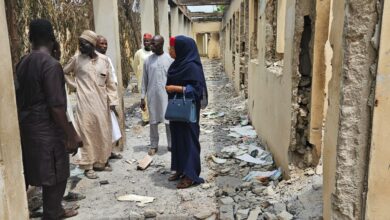
The Government reported progress in infrastructure, including the construction of 167 classrooms, renovation of 133 classrooms, drilling of 53 boreholes, provision of 19,534 furniture pieces, perimeter fencing, and other facilities. It urged communities to safeguard education infrastructure.
Commitment to Education Reform
The statement reiterated the administration’s commitment to quality and inclusive education, citing national and international recognitions received by Governor Abba Kabir Yusuf for reforms in the education sector.
The press statement, issued on behalf of the Executive Chairman, advised teachers to avoid being used by individuals or groups pursuing personal or political agendas and urged them to channel concerns through appropriate authorities for clarification and resolution.